Episode Transcript
[00:00:03] Esther Lucero: When I was called into this leadership role, one of the aunties said to me, you know, what's missing from leadership is love. The foundation of Indigeno is truly about love. I say to my team all the time, you know, when people walk through our doors, I want you to behave like it's your grandma walking through the door. I want you to behave like it's your auntie or your uncle. Right? Because what comes with that is respect.
I want you to welcome people to your home. Because what happens when you welcome people to your home, you know, you give them water, you break bread with them, you welcome them in a good way, you give them a hug, right? I mean, those are the ways that we welcome family. So caring for our community in the way that we care for our relatives is really key.
[00:00:44] Ashley D. Freeman: Welcome to another episode of Advocates in Action, a podcast created by the Patient Advocate Foundation, a nonprofit that helps promote equitable access to affordable, quality healthcare through providing case management services, financial assistance, and patient education and advocacy tools to people living with chronic, life threatening and debilitating illnesses.
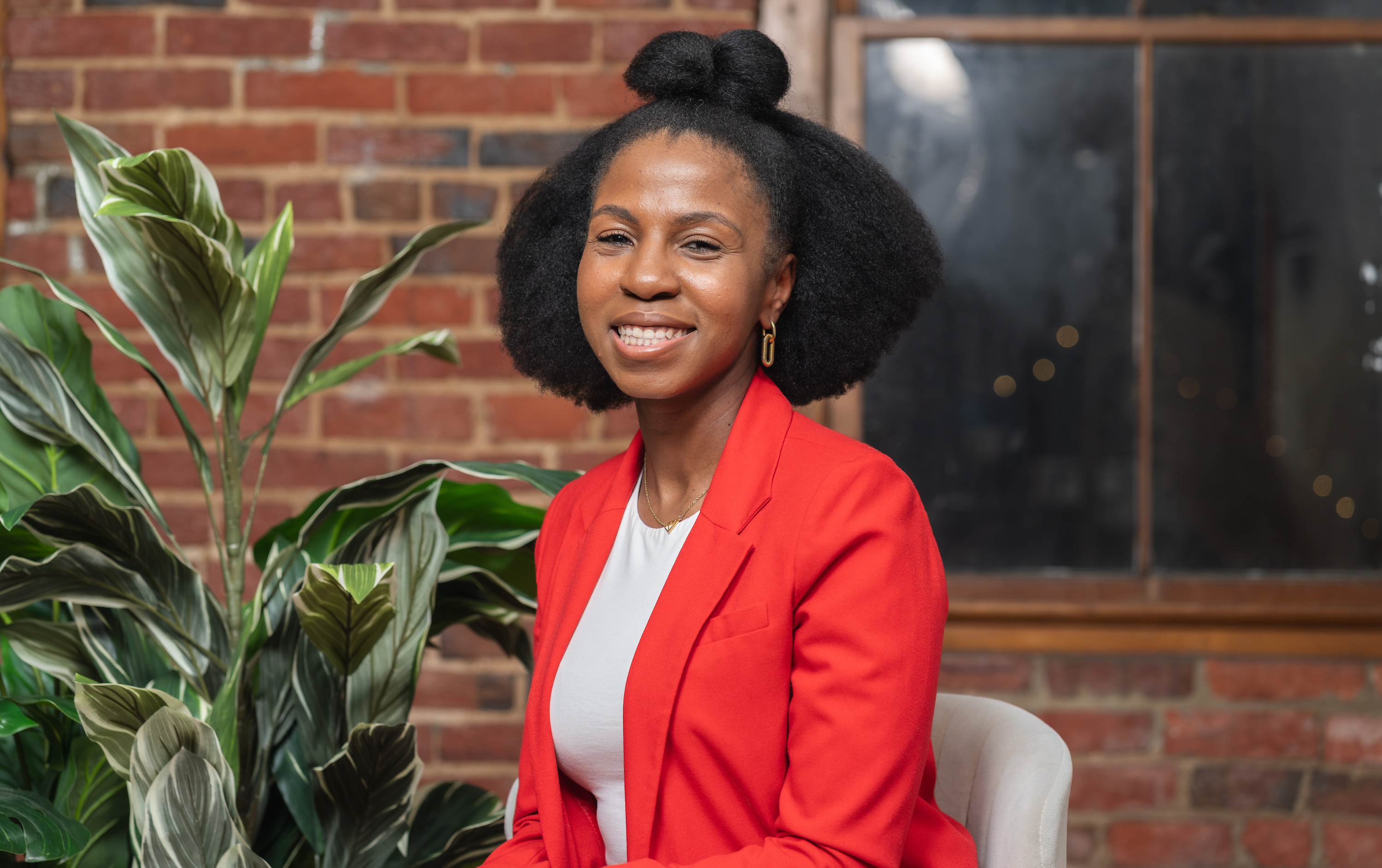
I'm your host, Ashley Freeman, manager of stakeholder outreach and engagement. Welcome back to Advocates in Action, where we are kicking off our 11th season, where we get the opportunity to highlight the stories and organizations of people who are protecting and expanding access in their communities. And today I get the pleasure and honor of speaking with Esther Lucero, who is the CEO and president of the Seattle Indian Health Board. And so I would love for you to open our conversation with a little bit of a context of who you are and what your organization does.
[00:01:53] Esther Lucero: Excellent. Thank you so much, Ashley, everybody. It's still morning here. So that means good morning in Navajo. My name is Esther Lucero and I'm Dine on my mom's side and Latina on my dad's side. And I serve as the president and CEO for the Seattle Indian Health Board and have had the privilege of serving our community in that way for the last 10 years. I am third generation in my family to grow up in an urban environment.
And so it's no coincidence that I have. I'm leading an urban Indian organization.
[00:02:23] Ashley D. Freeman: And tell us about the heartbeat behind the work that your organization does. And what are those different services that you provide in your community?
[00:02:35] Esther Lucero: Sure. Well, I think it's important to understand the origin of the Seattle Indian Health Board. We've been in existence now 56 years.
So the origin of Seattle Indian Health Board started with a group of Indian aunties from all different inter tribal communities. We are actually the product of the Urban Relocation act, which was a pilot program by the federal government that gave Indian people, Native people, one way bus tickets from their reservation systems. They said, we will give you a one way bus ticket from your reservation to move into. There were 12 different urban relocation sites. Seattle was one of them. And there was a promise of having economic opportunities, right? So there were these huge advertisements all over that you can become a doctor, you can become a lawyer, you can get an education.
When they arrived in these urban areas, those promises weren't kept. And so these urban Indian aunties, and now they're living in urban areas, decided that, you know, just because we're no longer on our reservations doesn't mean that that the benefits that were promised by the federal government due to their fiduciary obligations or treaty agreements should not end because we're now living in cities. So they mobilized to establish all of the urban native nonprofit organizations that are in Seattle now. And I believe that there are 27 of them. The Seattle Indian Health Board was one of them. We were designed to provide health and human services and meet the needs of Native folks living in Seattle.
Um, we also were part of the free clinic movement. So if you think about late 1960s, early 70s as the social justice revolution, right? It was kind of a renaissance during that time where there was so much need for social change, where inequities were being actually acknowledged and not being accepted any longer. So we saw things like the free clinic movement, the farm workers movement. We saw the American Indian movement learning from the Black Panther Party, right, about activism and rising together, standing shoulder to shoulder to create central change. So the Seattle Indian Hope Board was part of that. The American Indian movement took over Fort Lawton, an old military base in Seattle, and demanded change, demanded resources. They referred to them as the Gang of Four, right? And so that was Bernie White Bear, Louie Gossett, who was representative, the leader in black community at the time, Uncle Bob Sinbus, he was indepino, actually. So he was representing Asian Pacific Islander community at that time. And Roberto Maestas. So it was those four people came together and they decided that any social distance, any activism, any movement they would have, they would be standing together. We hear this whole concept, DEI now, right? Diversity, equity and inclusion for American Indians, Alaskan Indian people. These are prepaid benefits. This is not equal to dei. We, we are considered a political entity by statute. And these are things that we were promised due to the cessation of our land.
So I need to not hear DEI any longer. I need to make sure that our federal government is Meeting the obligations. And that's what we stand for every single day. And the way we do that is through the provision of help and human services. We have three clinics actually in Samuel Crawford, and we provide an array of services. So current behavioral health, nutrition services, dental services, primary care.
We have clinical pharmacists that help with med management and health education.
And every single care team we have actually has a traditional name that sleep canvas, because we've developed a model called digino Indigenous knowledge and border systems of care.
And indigenow is designed so that everything that we do is centered on traditional new medicine. So those three clinics provide those services.
We just opened our Thunderbird treatment center. So we have a 92 bed treatment center with 15 beds dedicated to serving pregnant and parenting people. We have a new clinic that will be opening here at Thunderbird treatment center. It's scheduled to be open in March of next year.
So that'll be our fourth clinic. And then we also have a mobile unit that we use for dental services and vaccines and, you know, for public health needs. The other thing Seattle Indian health board does is we operate the urban Indian health institute, which is one of 12 tribal epidemiology centers in the nation and the only one that has a national scope. So we are deemed a public health authority, just like a county system, just like a state system.
And I love that because the thing that people might be most familiar with that came out of the urban Indian health Institute is our report on missing and murdered indigenous people.
And that prompted legislative change across the nation. So we're really proud to do that public health work and to be able to provide direct service to our community health side.
[00:07:26] Ashley D. Freeman: You all clearly have your hands in so many different places making impact, whether it's through direct services or through policy work and legislation. You talked about the inception being rooted in social justice and the movements of that time and the importance of equity and really focus solidarity between so many communities.
How can we use the lessons from the inception of that. That time period now, you know, when people sometimes might feel powerless or like there's nothing that they can do. You know, what are some of those lessons that we can pull from our ancestors and generations that came before us to be able to use?
[00:08:09] Esther Lucero: Currently, the first issue is that there's this idea that by serving communities that are in need, right? By using data informed approaches to addressing the needs of marginalized communities, that somehow that lessens the privilege and power that others have been afforded in their lifetimes, right? It's basic economic theory to say when you uplift your lowest socioeconomic tiers. Everybody benefits.
And from a native way, it's about everybody stands in their rightful place in the circle. And that's when healing happens. I have elders who said that when you get four generations in a room, healing happens. When each person stands in their truth and stands and utilizes their strengths and their skills to benefit the benefit society as a whole, healing happens. Right? Collective power occurs. I think I'm the fourth CEO for the Seattle Indian Health Board. I am standing in the footsteps of giants. Right? We have Bernie White Bear, who I just spoke about as part of that gang of four. His sister, Luana Reyes, came after him. And, you know, she was the very first person who ever provided congressional testimony on behalf of urban Indians. There's an IHS and Indian Health Service building named after her because she was so effective in her leadership. Right. The person who came after her was Joanne Kaufman, and she was the person who established our first 65 bed residential treatment facility because she knew that our people were struggling with substance use. Right? Substance use as a consequence of trauma, historical trauma, and continued impacts of settler colonialism. Right. And then Ralph, for Cara, my predecessor, and he was the person who established the Urban Indian Health Institute. He knew that Western systems, government systems, needed data validation. Right. In that Western way. Even though we know our stories are data. Right. That's what it means to decolonize data, is to utilize our stories, tell the whole story. Right? So it's not enough to say that our communities struggle with substance use. You have to also tell the story that our youth have the highest rates of abstinence of any other ethnic group. Right. It's like, understand the strengths. Because if we didn't have strengths, then all of those attempts at genocide and assimilation would have been successful. Instead, I get to stand here before you leading an organization that is carrying that power forward, that love that came from those aunties.
[00:10:38] Ashley D. Freeman: You listed out the generations and the leaders that came before you, and it's clear that you feel a huge responsibility. That torch has been passed to you, and you carry it with so much grace. What do you feel like has been one of or a couple of those lessons that you have learned in your tenure so that the person who comes after you can sit in a conversation and talk about. And this is what Esther did.
[00:11:06] Esther Lucero: You know, it's funny, I keep looking for that next generation of leadership. I remember Indian aunties who were the ones who said, you need to apply for this position.
You have the skills it takes. And I remember thinking, oh, my gosh, me like I have no idea what it means to be a CEO, but I think what I've learned is, what I do know is I do know how to utilize these Western systems to propel our initiatives, to make sure that Western systems understand our indigenous epistemologies and our strengths. In that way, I feel like oftentimes I'm working as a translator within those systems, also recognizing that within our tribal communities that sometimes economic success seems to be viewed as a kind of a cop out. But the reality is, is it's just our form of trade has transitioned and we have to utilize those tools ahead of us. And so I think the gifts that I bring is like the ways that I'm able to use that money to move in our indigenous ways without threat or without violation, is to utilize those resources and utilize those translation skills to make sure that these Western systems leave us alone, leave us to our own accord. And how do we do that? Is by demonstrating that through these Western views, our data demonstrates that these systems work. Traditional neo medicine works not just for Native people, but for all people, because it takes us back to that time where we were all related. Right. If you go back far enough, we all came from tribal communities. And so remembering that blood memory, right, in those healing ways, I think there's like 271 of our pharmaceutical drugs came from Indian medicine. Right? And you can look that up. Virgil Vogel, he did a whole study on that. And so we're using those indigenous ways anyway. We've just commodified it. So what we have to do is bring that commodification, the resources that came from that commodification, full circle, to just strengthen our cultural ways.
[00:13:00] Ashley D. Freeman: And that goes back to the importance of data and the numbers and why you all are, you know, operating with your. Your entity that focuses on that. And I know we talked about CMS recently, developing a code to be able to build traditional medicine, but it isn't widespread yet. It's only in four states. What is the importance of that being able to be widespread for everyone to be able to access it?
[00:13:29] Esther Lucero: We have folks have been working on transphonia medicine billing for years, generation before me and generation before that. So I really have to uplift those folks. You know, I think about the folks who've been trying to get the canoe journey recognized as a healing modality. So where I was inserted into the conversation was through my work at the California Consortium for Urban Indian Health, where I had the privilege of facilitating conversations around traditional new medicine with community leaders, primary care doctors, behavioral health providers, traditional Medicine folks and just kind of getting to the core challenges, right? One of the things they said was that our young ones who were born to be healers were not pursuing that pathway because our systems have been disrupted by capitalism and our resource has become finance. And so the ways that our tribal communities had always taken care of our healers, right, like providing them with a home, making sure they always had food, you know, making sure that they had heat and warmth and, you know, any transportation they needed to get anywhere, those things had become dismantled. And so somewhat not in every tribe, I don't want to speak for every tribe, but for some of our tribes. And so our young ones weren't following those pathways because they were having a hard time finding a way to live.
And so what our healer said was, we want to make sure that there is a path for our young ones to go there. And so we have to find a way to use this money, right, to make sure that they can do that. The other thing they said is that, you know, they were doing some of this work already within our community health centers, within tribal systems, but that we were expecting them to carry their medicine bundles, right? They were like, you know, sometimes they'll just put us in a closet, put her out an office or whatever, and, you know, we have to come with our bundles. And they're like, you know, that's really disrespectful. Like, you don't ask your doctors to bring their syringes or their cotton balls or whatever they need to provide service, you know, and it's also dismissing the importance and the value of access to outside and access to cultivating a space that is healing, right? That the environment is just as important as the action, as the service, as the ceremony, as the prayer, as the medicine.
Being able to take some of that experience and actually apply it within our organization has been so instrumental to. Now we have four years worth of data, and we're seeing incredible outcomes, like a 71% reduction in suicidal ideation. There's a psychiatrist, actually, Dan Dickerson out of ucla, he tested the drum circle, right? And the drum circle is just as effective as AA in living a life of sobriety because of the way that you actually have to enter into that space because you have to have clean spirit, right? Clean mind, body and spirit in order to provide that service. You know, a drum circle for men is a service to community.
It's holding that heartbeat for community, right? You know, women. Women have the ability to bring life, and that's the serve and that's power and that strength. And so men have to put work in right to be able to uphold their responsibilities in community.
And we're able to use our knowledge of how political systems work and policy systems work to be able to introduce legislation. So now through the ARPA funds, we were able to secure a two year pilot for traditional Neo medicine, or 100% FMAP, which allowed the states receive the federal match for services provided by urban Indian organizations. And then our state of Washington redirected those resources back into the urban programs.
It also allowed us to utilize traditional new medicine to pull that data so that we could demonstrate to an organization like CMS the value add to having traditional new medicine become a billable practice. So yeah, it's all interwoven, interconnected. Seattle Indian Health Board is well positioned because of our political prowess, because of our data interest, and because of our success in introducing legislation.
[00:17:29] Ashley D. Freeman: And you mentioned the importance of environment.
And I know there's a lot of intentionality behind the environment, even with building your Thunderbird Treatment Center. So explain a little bit about the mindset to build this space for it to serve the people that you are serving, but allowing them to feel seen and known and walk through the door and feel welcomed and see people who look like them and speak their language and can truly understand the context of who they are.
[00:18:03] Esther Lucero: Yeah. And I think most importantly to be received with love. Right. Like it's the welcome home with love. I remember saying that I want to have the Betty Ford of Indian country. Right. Meaning that if I were going into treatment, they send me to Tahiti or something. And you get to be on a beautiful island removed from any of those vices. Right. Removed from maybe the traumatic experiences that propelled you to pursue substances as coping mechanism. So our Thunderbird Treatment center is on Vashon Island. So it is an island. You have to get here by ferry or water taxi. The second you step on this land, healing happens. And I'll tell you why. First, because it's tribal land.
The Coast Salish people. This is the original land of those people.
It butts up against the land trust where there is preservation of, you know, traditional plants to this region.
It's about two miles to the water. Water is a really important aspect of healing. All of the elements are important aspect of healing. This property is allowing us to have our sweat lodges so that we can actually have ceremony here.
We built the brown ceremonial space that's made of cedar. And the word love and as many different tribal languages as we could translate is carved into the wood in that space.
It lets Us know where the sun is because many of our ceremonies are related to sunrise and new beginnings. So that we know where we're facing east so that we can start in a good way.
We hired an architectural firm that was an expert in trauma informed design. So the lighting is designed so that it's calming and healing. The air is clear, it's quiet, it's peaceful.
I will tell you that Betty Ford wants the Thunderbird of the treatment world now. It is so beautiful when you walk into this space, it's like entering into the finest spot you've ever entered into.
And we have representation from so many different tribal communities that it doesn't matter what tribe you come from. Right. What we're trying to do is help people see reflections from as many distinct tribal communities as possible.
Because it's not about us, like kind of interweaving our traditional ways or our ways of moving through the world, but instead it's about sharing our distinct ways of being. Right. That's what we call diversity. We're diverse even in our own tribal communities. And diversity brings strength. It brings power. So when we share our experiences of culture, we cultivate an environment that is healing for everybody.
[00:20:42] Ashley D. Freeman: Not only are you all intentional about the place and the setting, but you're also intentional about the language that you use. And I read somewhere that you all don't call your patients patients, but you call them your relatives. And there's also intentionality behind making sure that parents and whole family units can also be served. So please explain that intentionality behind language and also that focus on keeping a family unit together.
[00:21:16] Esther Lucero: Yeah, I remember when we actually developed our indigenous knowledge informed systems of care. This was about, like 15 years ago where all the rage was trauma informed systems of care. But what we realized is trauma informed systems of care. They were designed to say, hey, we all come from our own experiences of trauma and we're committing to not re traumatizing one another. Right. But that didn't take account of the strengths. And so our indigenous knowledge informed systems of care, it's now known as indigino, came from that strengths based place. Right. When I was called into this leadership role, one of the aunties said to me, you know, what's missing from leadership is love. The foundation of Indigeno is truly about love.
So language is really important because our traditional languages are what help us move through our blood memory. Right? And sometimes that's all we can do in healing, is propel people to experience that blood memory to remember who we are. Because strengthening cultural identities is really key to overcoming trauma. We call our patients our relatives because it's both a service model, but it's also the way we move through the world. You know, I say to my team all the time, you know, when people walk through our doors, I want you to behave like it's your grandma walking through the door. I want you to behave like it's your auntie or your uncle, right? Because what comes with that is respect.
I want you to welcome people to your home. Because what happens when you welcome people to your home, you know, you give them water, you break bread with them, you welcome them in a good way, you give them a hug, right? I mean, those are the ways that we welcome family.
And so caring for our community in the way that we care for our relatives is really key.
You can feel that throughout Thunderbird Treatment Center. You can feel that through our clinics. The first thing that will happen when you walk in our doors is you'll experience the smell of medicine. Right? Whatever it is, our traditional medicine team has smudged with that day. Like sharing that way of cleansing and centering yourself, grounding yourself. You'll hear prayers and songs in many different languages. So powerful sports have become a really important thing. We have a sports court out here at Thunderbird Treatment Center. Basketball is a big deal in Indian country. We have lots of basketball tournaments, like three on three. We have gardening for our. For our women, our two spirit people. You know, helping people return to those traditional tribal roles. Oh, my. That is power. And it's just simply love.
[00:23:45] Ashley D. Freeman: I appreciate you saying it's just simply love because I think so many people get caught up in all of the other things. And when you boil it down to it's just simply love.
And you mentioned your team and the way you all execute your service of opening the doors and, you know, treating the person in the front of you as if it's your grandmother. I have secondhand experience in other treatment centers because both of my parents a history of substance use. And I remember being in those different treatment centers and it feeling very othered, like I'm a worker. I'm a person who is here, has my life together. I'm not impacted by the same things that you are as a patient. And there was a disconnect there that can further cause shame and a lot of other things that that may come up when trying to seek out treatment. And so when I hear you describe this beautiful place where you welcome people as if they're family, like you said, love and respect.
But that just makes walls come down right? That makes the shame and the guilt and the heaviness that might be on a person as they're walking through those doors, it makes it dissipate.
So I just wanted to say thank you for that because of my own personal connection with it. And just hearing you describe that, it just warmed my heart. So I just wanted to say that I appreciate that.
[00:25:22] Esther Lucero: Ashley, may I expand on that just a little? If you think about Dr. Maria Yellowhorse, Braveheart's work right around historical trauma, and she defines it as a cumulative psychological wounding emanating from mass group trauma experiences, right?
And in order to heal from that, because we were impacted as a community, then we have to heal as a community.
So the difference about working at the Seattle Indian Health Board is, you know, it's Western training that says I'm the expert, right? And I have to have these boundaries. If I see you out in community, I can't even acknowledge you. That's the way Western systems are designed, and it creates this hierarchy of power.
And for us, we dismantle that higher because the people who are in charge are our relatives, right? They get to decide whether they want to receive medically assisted treatment or whether they want to do abstinence based. They get to decide that. So you become part of community whether you're a service provider or whether you're a person receiving service, right? Is what we are all in community together.
And I think that that's the other reason we had to address this issue for pregnant and parenting people.
We heard from some of our tribal leaders that we are losing generations of our babies, right, due to parenting people struggling with addiction. And so these children are being pushed into foster care systems. We don't have enough Native families in those systems. And so they're being adopted out to non Native communities. And we're just losing generations of our babies. We had to make a difference there. And so at Thunderbolt Treatment center, you get to bring two children up to the age of five with you so that you heal as a family and you heal as a full community.
And it's healthy for our young ones to see their parents move through addiction and to overcome addiction and to live that healthy lifestyle and to learn how to be part of community again. Right? That's strength and power, and we're keeping those families intact. That's really key. Our next generations are key.
[00:27:22] Ashley D. Freeman: What you just said about the heartbeat behind keeping families together and the beauty children get to watch their parents go through that journey once again. I can also relate to that. I used to go to NA Meetings with my mom when I was younger, you know, and I remember her keychains and the Serenity Prayer. There is an underappreciation for that. So, once again, thank you for understanding the context of the importance of keeping that family unit together.
And if there's one thing or maybe multiple things that you hope that people understand after hearing this conversation between the two of us, what would it be?
[00:28:06] Esther Lucero: I would say that the power is in diversity, because diversity is core to culture. And sharing different cultural ways and different cultural values is only power. If you have only one way to heal or only one way of knowing or being or moving through the world, you. It's just natural selection. It leaves you really vulnerable to risk. And to your end, thinking about diversity differently and remembering that all it really is is just simply moving through the world with love, that we will all benefit. Our knowledge is unmatched. And I think coupling our traditional ways and our indigenous epistemologies with this new wave of technology and resource is powerful. And so it will help us move through for generations to come. And then lastly, I can't wait for the day that our communities no longer need Thunderbird Treatment center, that we can reclaim the space and turn it into, I don't know, magical community center or something.
[00:29:10] Ashley D. Freeman: And what gives you hope in this season where there are so many attacks on equity?
What gives you hope to continue this work that you and your team are called to do?
[00:29:22] Esther Lucero: From chaos comes creation. We've seen so many examples of that. I spoke about the social justice movements. The most incredible art has come out of tragedy. Right now we are experiencing an indigenous renaissance. And what I will say is it's time for women to take their rightful place in their leadership circle and go back to some of those matriarchal ways of being.
When we do that, we're going to see real strength. I think it's inevitable, actually. There's so many prophecies that have suggested that, and I think that's what we're seeing. So I say listen to your mamas. Listen to your grandmas.
[00:29:59] Ashley D. Freeman: I'm Ashley Freeman and thanks for listening to this episode of Advocates in Action. If you haven't yet, please subscribe, review and share this podcast. Your support is greatly appreciated. We enjoy connecting with our listeners, so please visit our website for show notes, resources, and ways to engage with us on social media. Thanks for listening.